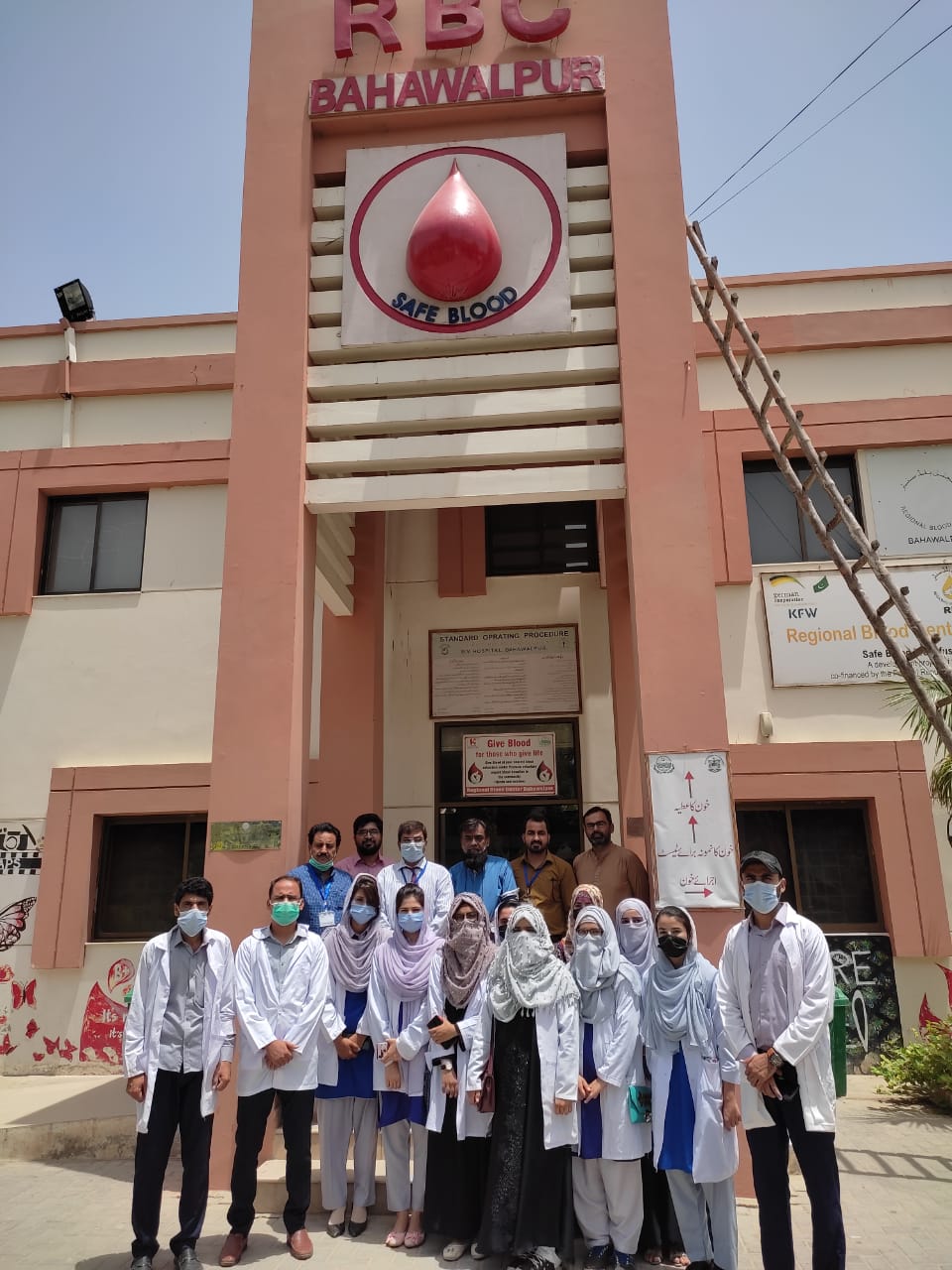
The Blood Center was inaugurated in October 2013 with a vision to provide safe blood, meeting international standards to all segments of the society without any discrimination. The Blood Center is aimed to mobilize the nation towards 100% voluntary blood donations.
In a span of just a few years, the Blood Center has not only been able to support Indus Hospital & Health Network and its network of 13 hospitals but also the blood banks of many private, government, and NGO-based hospitals in Karachi.
Currently, the Indus Hospital and Health Network is providing blood banking services at the following sites as requested by the governments of Punjab and Sindh.
Location in Bahawalpur :
Regional Blood Center, Bahawalpur
Bahawal Victoria Hospital (BVH), Bahawalpur
Jubilee Female Hospital and School of Nursing, Bahawalpur
Visit and what we see there?
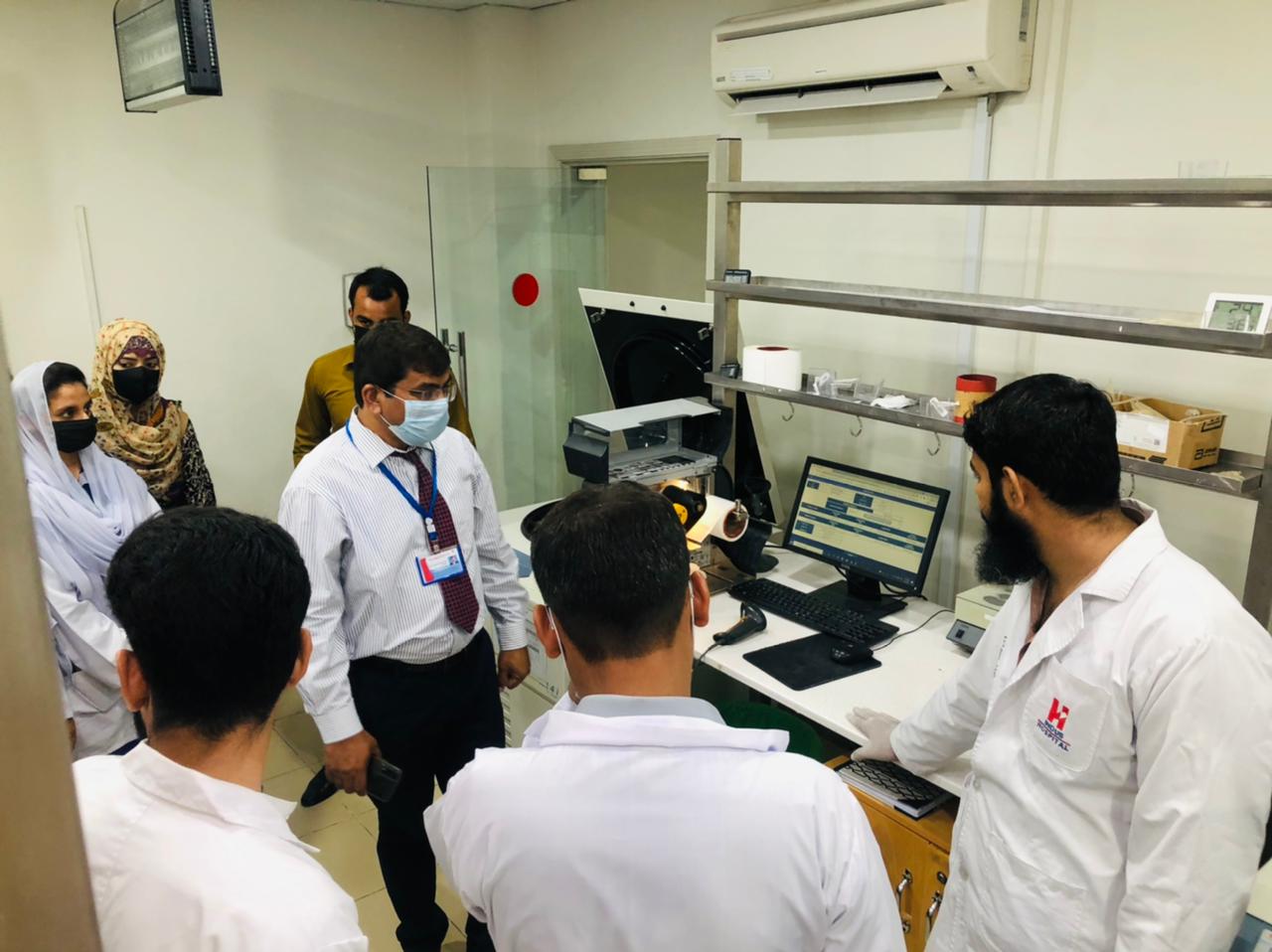
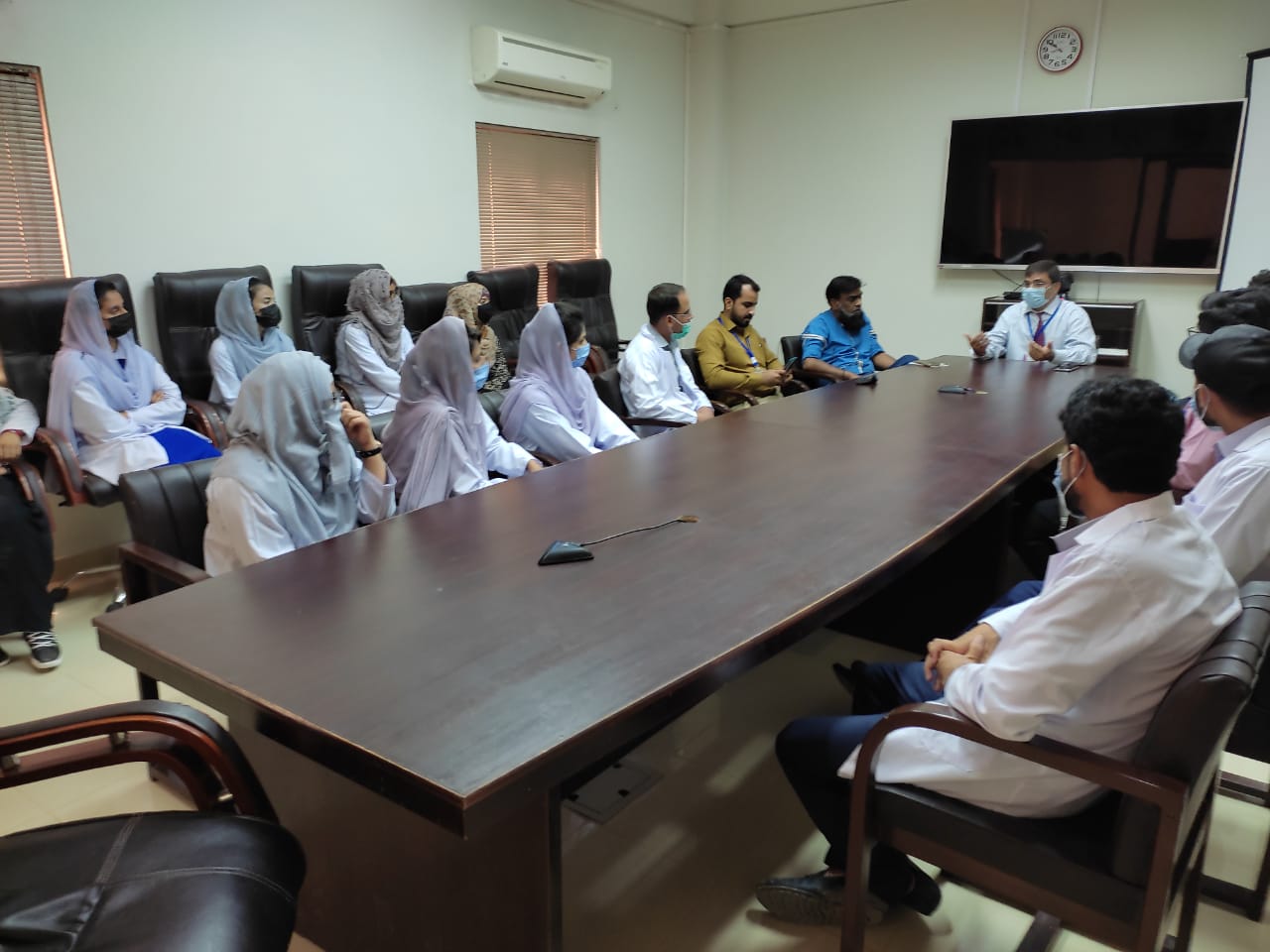
We visited blood center and we come to know about it’s deep details .
Blood and it’s components:
The main components of blood are:
plasma
red blood cells
white blood cells
platelets
Plasma
Plasma accounts for around 55% of blood fluid in humans. Plasma is 92% water, and the contents of the remaining 8% include:
glucose
hormones
proteins
mineral salts
fats
vitamins
The remaining 45% of blood mainly consists of red and white blood cells and platelets. Each of these has a vital role to play in keeping the blood functioning effectively.
Find out what plasma donation involves.
Red blood cells, or erythrocytes
Red blood cells have a slightly indented, flattened disk shape. They transport oxygen to and from the lungs. Hemoglobin is a protein that contains iron and carries oxygen to its destination. The life span of a red blood cell is 4 months, and the body replaces them regularly. The human body produces around 2 millionTrusted Source blood cells every second.
The expected number of red blood cells in a single drop (microliter) of blood is 4.5–6.2 million in males and 4.0–5.2 million in females.
What percentage of red blood cells should people have in their body?
White blood cells, or leukocytes
White blood cells make up less than 1% of blood content, forming vital defenses against disease and infection. The number of white blood cells in a microliter of blood usually ranges from 3,700–10,500. Higher or lower levels of white blood cells can indicate disease.
What does it mean if a person has a high white blood cell count?
Platelets, or thrombocytes
Platelets interact with clotting proteins to prevent or stop bleeding. There should be between 150,000 and 400,000 platelets per microliter of blood.
Bone marrow produces red blood cells, white blood cells, and platelets, and from there they enter the bloodstream. Plasma is mostly water that is absorbed from ingested food and fluid by the intestines. The heart pumps them around the body as blood by way of the blood vessels.
What does it mean if a person has high or low platelet levels?
Functions
Blood has various functions that are central to survival. They include:
supplying oxygen to cells and tissues
providing essential nutrients to cells, such as amino acids, fatty acids, and glucose
removing waste materials, such as carbon dioxide, urea, and lactic acid
protecting the body from diseases, infections, and foreign bodies through the action of white blood cells
regulating body temperature
The platelets in blood enable the clotting, or coagulation, of blood. When bleeding occurs, the platelets group together to create a clot. The clot forms a scab, which stops the bleeding and helps protect the wound from infection.
Donating blood :
Giving blood is always a selfless act that helps the people that need it most. But when you donate blood at Marsh Regional Blood Center, you’re contributing directly to local hospitals, cancer centers, medical facilities and rescue aircraft. Every donation from the area is given to those within the Highlands community.
Saving lives with a consistent blood supply
With each blood donation, you’re saving up to three lives in the area. Each time you donate blood or platelets, you know that you’re contributing to a necessary supply that could benefit your friends, family, coworkers or neighbors.
Are there medical benefits to giving blood?
Absolutely! Did you know that you receive a complimentary mini-physical every two months when you donate blood regularly?
Each time you visit a Marsh donation center or blood drive, we evaluate your blood pressure, pulse, temperature and red cell level before you donate. This can help you stay informed about your own health between regular visits to the doctor.
It can even make it easier to detect changes in these numbers over time.
Donating blood also helps reduce excess iron. Many people – especially men – tend to feel better after donating blood. This is likely because your iron level drops a few points when you give blood. It forces your body to produce “new” blood to replace the “old” blood you donated.
Some see this as a natural “oil change” for the body.
Matching
Donation Procedure and Donor Safety – Whole Blood Donations
Since the institution of blood banking, safety for both donors and blood recipients has been continually and significantly improved. Because a safe, reliable source of blood is critical to providing effective blood products to recipients, blood banks are dependent on the altruistic voluntary donations of citizens. As a result, blood banks place great emphasis on making the donation process pleasant, convenient, and as safe as possible for donors.
The donation process begins with a screening procedure to determine if the donor is healthy and has no conditions that would make his or her donation hazardous. Donors are asked about their general health, as well as their travel history and possible past exposure of blood-transmitted diseases, such as HIV, malaria, and hepatitis. A simple physical, including blood pressure, pulse rate, and temperature, is used to rule out other risks. This physical will also look for signs of any of the blood-transmitted diseases that might increase recipient risk. A simple laboratory measurement is used to make sure that the blood donation will not make the donor anemic.
If the donor is found suitable for donating blood, approximately one pint of blood is collected from an arm vein into a plastic bag. This is normally well tolerated by the donor, since the average donor’s blood volume is about 11 pints. The donor will produce replacement fluid for the blood donation within 24 hours and red blood cells in four to six weeks. At least eight weeks between donations are therefore required for whole blood donations.
Complications of blood donations are uncommon and usually minor. Fainting is typically the most significant complication encountered. This can be minimized by requiring the donor to wait a short period of time after donation before standing, and to eat and drink fluids before leaving the donor area. Minor bruising at the needle site may also occur.
Recipient Safety
Risks for a person receiving blood can be divided into several categories, which include reactions due to incompatible blood types, allergic reactions, and infections in the donated blood. By strictly adhering to standardized procedures, these risks have been reduced to a minimum.
Blood Type Matching
On their surface, red cells have inherited chemical structures called antigens that can cause a person’s immune system to make antibodies against them. Humans have 35 major groups or families of these antigens, as well as other minor groups, but consideration of two, the ABO group and the RhD group, is very important to ensure that a transfusion recipient receives compatible blood. The presence of antigens within these groups is what determines a person’s blood type. Blood types are referred to as Type A, Type B, Type AB (which has both A and B antigens), or Type O (which has neither A or B antigens) followed by positive or negative, which indicates the presence of the RhD antigen. Persons who are RhD negative have no RhD antigen.
Blood Types
ABO Antigen Group RhD Antigen Group
A Positive
A Negative
B Positive
B Negative
AB Positive
AB Negative
O Positive
O Negative
Persons with a given antigen do not make antibodies against their own antigen, but will against the other antigens in that group. For example, if a person has type A blood, he (or she) will make antibodies against the B antigen, but not against the A antigen. That means that if this person is given either type B red blood cells or type AB red blood cells, his or her antibodies will attack and destroy the foreign red cells possessing the B antigen, causing a transfusion reaction. Similarly, a person having the RhD antigen will not make antibodies against RhD antigen, but the RhD negative person will make antibodies against blood with RhD positive red cells.
Recipient Blood Type Matching Donor Blood Type
A+ A+, A-, O+, O-
A- A-, O-
B+ B+, B-, O+, O-
B- B-, O-
AB+ Compatible with all blood types
AB- AB-, A-, B-, O-
O+ O+, O-
O- O-
Antibodies in the plasma of donors with different blood types cause a reverse situation. For example, since a person with Type AB blood makes no antibodies against Type A or Type B cells, his or her plasma can be given to a person with Type A, Type B, Type AB, or Type O blood.
In emergency situations, when the recipient’s blood type is unknown, the person can receive type O negative red cells without producing an ABO or RhD incompatibility reaction. In other situations, even non-emergent, where the recipient’s specific blood type is known but there is no type-specific blood available, a compatible type may be used if determined to be compatible by cross-matching. Cross-matching is a simple and commonly practiced laboratory test that verifies blood compatibility. In the latter instance, for example, if an AB positive recipient needs blood and there are no AB positive donors, they could receive blood from a Type A positive donor after a proper cross match.
Allergic and Other Reactions
Delayed hemolytic reactions may occur if the recipient makes antibodies against minor antigens on the transfused red cells. Such reactions are usually mild and are caused by certain chemicals in the donor’s blood; these may cause fever, hives, rashes, itching, low blood pressure, and similar symptoms. In rare instances, patients receiving massive blood transfusions may develop transfusion-associated acute lung injury, which is caused by an inflammatory reaction to large amount of foreign chemicals in the donor’s blood.
Infection
Infectious complications receive the most attention, especially since the HIV epidemic. However, with the advent of modern testing, this risk has been reduced by quantum leaps. Bacterial infections from contaminated components, especially platelets, still occur on rare occasions. However, infection with blood-borne infectious agents, such as hepatitis B, hepatitis C, and HIV have been reduced to infinitesimal levels by careful donor selection and screening procedures and by laboratory testing with new technologies. Attention is currently being directed toward preventing emerging infectious agents, i.e, Babesiosis variant Creutzfeld-Jakob Disease, Chagas disease, etc., from becoming threats to the American blood supply.
American Society of Hematology Logo
PATIENTS
AMERICAN SOCIETY OF HEMATOLOGY EDUCATION PATIENTS BLOOD BASICS BLOOD SAFETY AND MATCHING
Blood Safety and Matching
Donation Procedure and Donor Safety – Whole Blood Donations
Since the institution of blood banking, safety for both donors and blood recipients has been continually and significantly improved. Because a safe, reliable source of blood is critical to providing effective blood products to recipients, blood banks are dependent on the altruistic voluntary donations of citizens. As a result, blood banks place great emphasis on making the donation process pleasant, convenient, and as safe as possible for donors.
The donation process begins with a screening procedure to determine if the donor is healthy and has no conditions that would make his or her donation hazardous. Donors are asked about their general health, as well as their travel history and possible past exposure of blood-transmitted diseases, such as HIV, malaria, and hepatitis. A simple physical, including blood pressure, pulse rate, and temperature, is used to rule out other risks. This physical will also look for signs of any of the blood-transmitted diseases that might increase recipient risk. A simple laboratory measurement is used to make sure that the blood donation will not make the donor anemic.
If the donor is found suitable for donating blood, approximately one pint of blood is collected from an arm vein into a plastic bag. This is normally well tolerated by the donor, since the average donor’s blood volume is about 11 pints. The donor will produce replacement fluid for the blood donation within 24 hours and red blood cells in four to six weeks. At least eight weeks between donations are therefore required for whole blood donations.
Complications of blood donations are uncommon and usually minor. Fainting is typically the most significant complication encountered. This can be minimized by requiring the donor to wait a short period of time after donation before standing, and to eat and drink fluids before leaving the donor area. Minor bruising at the needle site may also occur.
Recipient Safety
Risks for a person receiving blood can be divided into several categories, which include reactions due to incompatible blood types, allergic reactions, and infections in the donated blood. By strictly adhering to standardized procedures, these risks have been reduced to a minimum.
Blood Safety and Matching
Donation Procedure and Donor Safety – Whole Blood Donations
Since the institution of blood banking, safety for both donors and blood recipients has been continually and significantly improved. Because a safe, reliable source of blood is critical to providing effective blood products to recipients, blood banks are dependent on the altruistic voluntary donations of citizens. As a result, blood banks place great emphasis on making the donation process pleasant, convenient, and as safe as possible for donors.
The donation process begins with a screening procedure to determine if the donor is healthy and has no conditions that would make his or her donation hazardous. Donors are asked about their general health, as well as their travel history and possible past exposure of blood-transmitted diseases, such as HIV, malaria, and hepatitis. A simple physical, including blood pressure, pulse rate, and temperature, is used to rule out other risks. This physical will also look for signs of any of the blood-transmitted diseases that might increase recipient risk. A simple laboratory measurement is used to make sure that the blood donation will not make the donor anemic.
If the donor is found suitable for donating blood, approximately one pint of blood is collected from an arm vein into a plastic bag. This is normally well tolerated by the donor, since the average donor’s blood volume is about 11 pints. The donor will produce replacement fluid for the blood donation within 24 hours and red blood cells in four to six weeks. At least eight weeks between donations are therefore required for whole blood donations.
Complications of blood donations are uncommon and usually minor. Fainting is typically the most significant complication encountered. This can be minimized by requiring the donor to wait a short period of time after donation before standing, and to eat and drink fluids before leaving the donor area. Minor bruising at the needle site may also occur.
Allergic and Other Reactions
Delayed hemolytic reactions may occur if the recipient makes antibodies against minor antigens on the transfused red cells. Such reactions are usually mild and are caused by certain chemicals in the donor’s blood; these may cause fever, hives, rashes, itching, low blood pressure, and similar symptoms. In rare instances, patients receiving massive blood transfusions may develop transfusion-associated acute lung injury, which is caused by an inflammatory reaction to large amount of foreign chemicals in the donor’s blood.
Infection
Infectious complications receive the most attention, especially since the HIV epidemic. However, with the advent of modern testing, this risk has been reduced by quantum leaps. Bacterial infections from contaminated components, especially platelets, still occur on rare occasions. However, infection with blood-borne infectious agents, such as hepatitis B, hepatitis C, and HIV have been reduced to infinitesimal levels by careful donor selection and screening procedures and by laboratory testing with new technologies. Attention is currently being directed toward preventing emerging infectious agents, i.e, Babesiosis variant Creutzfeld-Jakob Disease, Chagas disease, etc., from becoming threats to the American blood supply.
Matching
On their surface, red cells have inherited chemical structures called antigens that can cause a person’s immune system to make antibodies against them. Humans have 35 major groups or families of these antigens, as well as other minor groups, but consideration of two, the ABO group and the RhD group, is very important to ensure that a transfusion recipient receives compatible blood. The presence of antigens within these groups is what determines a person’s blood type. Blood types are referred to as Type A, Type B, Type AB (which has both A and B antigens), or Type O (which has neither A or B antigens) followed by positive or negative, which indicates the presence of the RhD antigen. Persons who are RhD negative have no RhD antigen.
Banking Your Own Blood
An individual may bank his/her own blood for a transfusion during an upcoming
surgical procedure. This type of transfusion, although not risk free, is the safest form of transfusion for the recipient because it eliminates the risk of blood-borne infections from other donors. For this donation, the blood is usually drawn three to five weeks prior to the expected surgery and stored, reserved only for use by the donor. If not used, it is discarded and is not used for other recipients.
Criteria used to qualify a possible donor for such auto-transfusion often eliminate many donors from using this form of donation. The donor must not be anemic or have signs of infection, must weigh more than 65 lbs, and must have no medical conditions that would cause problems during or after the donation such as unstable angina, a history of stroke or heart attack within six months, severe hypertension, or be scheduled for a surgical procedure where is a transfusion is expected
 Physiotherapist